Licence No. 387609C
Power failures in commercial buildings can disrupt operations, compromise safety systems and damage sensitive equipment. For businesses that rely on lighting, security, refrigeration, communications, IT infrastructure or essential plant, emergency power reliability is not just a technical consideration. It is a practical part of keeping the site safe and operational when the mains supply fails. Drawing on the experience of Fraser Electrical, this article explains how backup power systems can be designed, maintained and assessed to perform more reliably under real outage conditions.
It also examines the risks power interruptions create for different types of commercial premises, the common causes of backup power failure and the steps that help improve system performance over time. From generators and UPS systems through to switchboards, transfer equipment and compliance testing, the focus is on the decisions that support dependable emergency power in commercial buildings. For businesses seeking advice from a commercial electrician on the Central Coast, understanding these fundamentals makes it easier to identify weaknesses before they lead to costly disruption.
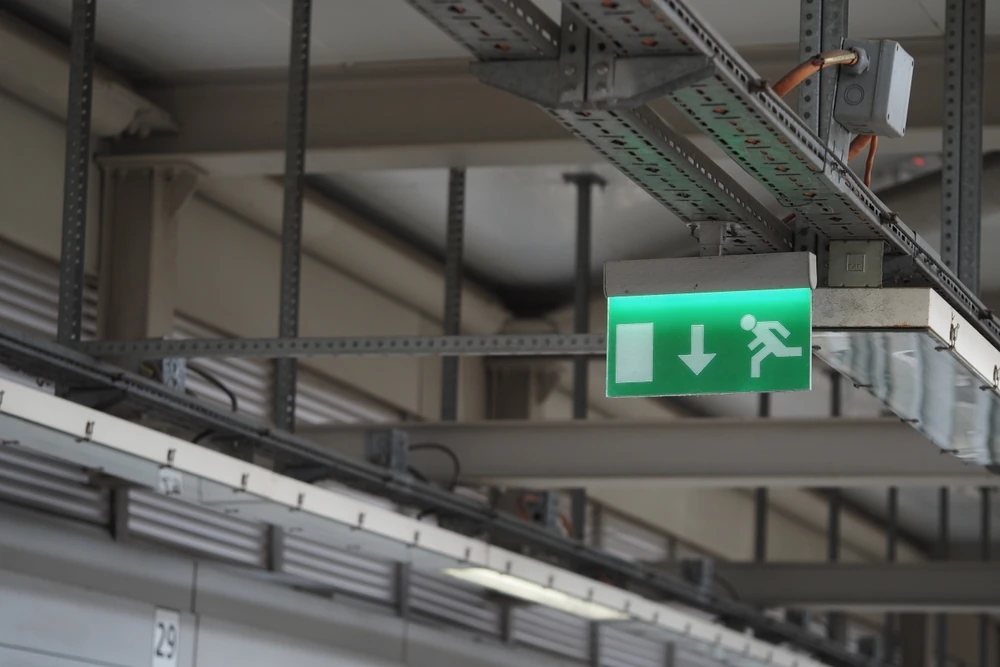
Emergency power reliability is not simply a compliance issue. It has a direct impact on safety, continuity and financial performance. When the mains supply fails, the quality of the backup power system determines whether a business can continue operating safely or whether it faces immediate disruption, asset damage and avoidable downtime.
For commercial premises that rely on continuous power for lighting, security, IT, refrigeration or life safety systems, any weakness in backup supply can quickly become a serious operational risk. A reliable emergency power setup helps reduce downtime, supports legal obligations and protects the long-term functionality of the building and its equipment.
Emergency power plays a critical role in supporting life safety systems. If these systems fail during a blackout, occupants may be exposed to unnecessary risk and the building owner or operator may fall short of regulatory obligations.
Critical services that often depend on backup power include:
If these systems do not receive stable power during an outage, evacuation becomes more difficult, high-risk areas may not remain secure and emergency response can be affected. This can expose building owners and operators to breaches of building codes, workplace health and safety duties and insurance conditions.
For many commercial sites, a loss of power leads almost immediately to lost revenue and interrupted service. In office environments, outages can affect communications, HVAC, lifts and IT systems. In retail settings, they can stop point-of-sale systems, lighting and security. In industrial and warehousing facilities, they can interrupt plant, logistics systems and production processes.
Poor emergency power reliability can lead to:
Over time, the cost of downtime, stock loss and equipment damage often exceeds the investment needed to improve the reliability of the backup power system.
Power-related disruptions also affect how a business is perceived. Tenants, customers and other stakeholders often judge a business by how well it functions during adverse conditions. Repeated outages or poor recovery can signal weak planning and reduce confidence in the site’s management.
Reliable emergency power supports:
In safety-critical or time-sensitive environments, the ability to maintain power during an outage is a core operational requirement. In these settings, backup power should be treated as part of the building’s resilience strategy rather than as a basic compliance item.
Backup power systems in commercial buildings often fail for predictable reasons. In many cases, the problem is not the idea of backup power itself, but poor maintenance, incorrect specification or overlooked faults in connected infrastructure.
The most common causes usually involve inadequate servicing, fuel issues, battery degradation, incorrect load assumptions or problems with transfer and control systems. These issues can leave a building technically equipped with backup power, but unable to rely on it when an actual outage occurs.
One of the most common reasons generators and UPS systems fail is lack of routine maintenance. Equipment may remain on standby for long periods, then be expected to perform immediately without recent testing or inspection.
Filters can clog, coolant can degrade, belts can loosen and lubrication can deteriorate when equipment is not exercised regularly. In diesel generators, starter batteries are a frequent weak point. A battery may appear acceptable during a basic check but still fail under cranking load. UPS systems face similar risks, as their internal batteries have a limited service life and gradually lose capacity over time.
Routine testing under realistic operating conditions is essential. Running a generator only under no load or very light load can hide issues such as fuel contamination, cooling faults or unstable output. Regular testing under meaningful load is far more effective at identifying problems before a real outage does.
A generator is only as reliable as its fuel supply. Degraded or contaminated diesel is a common reason why generators fail to start or shut down shortly after startup.
Diesel held in storage can be affected by water ingress, microbial growth and sediment buildup. These problems can block filters, damage injectors and cause unstable operation. Tanks that are rarely inspected or exposed to fluctuating temperatures are particularly vulnerable. Without periodic fuel testing, polishing or cleaning, these issues may only become obvious during a blackout.
Fuel logistics are another common weakness. Undersized tanks, poor access for refuelling or unclear replenishment arrangements can mean that a generator starts correctly but cannot run for the required duration. On larger or multi-tenant sites, changes to the building load may also reduce actual runtime well below what was originally assumed.
Even well-maintained equipment can underperform if it has been incorrectly designed or specified. Backup systems that are too small may start successfully but overload once the building load transfers across. This is common in sites that have expanded over time or added HVAC, IT equipment, plant or other electrical loads without reviewing backup power capacity.
Problems can also occur where automatic transfer switches, surge protection devices and building management systems are poorly coordinated. Common faults include incorrect time delays, transfer switches that do not detect supply conditions properly and load shedding arrangements that disconnect important circuits instead of non-essential ones.
Reliable emergency power depends on more than a generator or UPS alone. It depends on the system working correctly as a whole.
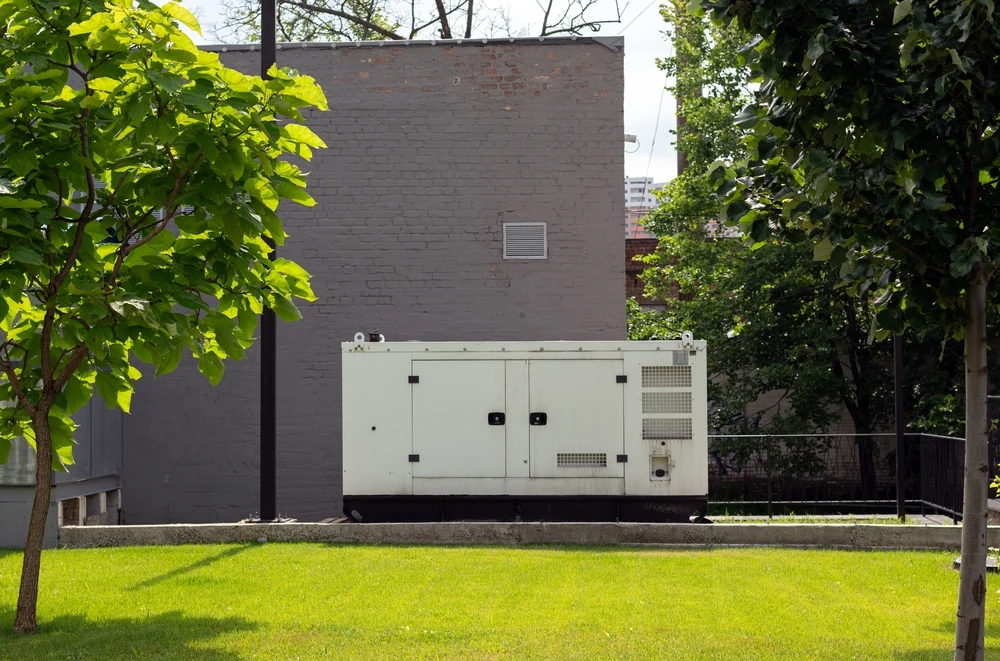
Selecting the right backup power solution starts with understanding which loads need to remain operational, how long they need to be supported and how much interruption they can tolerate. Different technologies suit different needs, budgets and building types.
In many commercial buildings, the most dependable arrangement is a layered system that combines a standby generator with batteries or a UPS. The right mix depends on the critical loads, expected runtime, space constraints, operational priorities and applicable compliance requirements.
Standby generators are commonly used where power may need to be maintained for hours or even days. They are well suited to offices, retail premises, industrial facilities, healthcare settings and aged care environments where continuity is important over longer outage periods.
When assessing a generator solution, key considerations include fuel type, capacity, start time and operating conditions. Diesel generators are widely used on commercial sites because they offer strong output and dependable performance. Natural gas generators may suit some sites where piped gas is available and there are tighter noise or emissions considerations.
Automatic transfer switches are essential in these systems because they allow the generator to start and take load without manual intervention. In many commercial applications, a start time of around 10 to 30 seconds is acceptable for services such as general lighting and HVAC. It is not suitable, however, for equipment that cannot tolerate any interruption.
A UPS provides immediate short-term power during a mains failure. It is designed for systems that cannot withstand even a brief interruption, such as servers, communications equipment, security systems, medical devices and critical control systems.
Rather than replacing a generator, a UPS typically bridges the gap between power loss and generator startup. It also protects against voltage fluctuations, dips and other short-duration supply disturbances that may not trigger a full generator response but can still disrupt sensitive equipment.
UPS selection should take into account battery runtime, load profile, redundancy requirements and future expansion. It is also important to consider battery replacement intervals, ambient temperature and available bypass arrangements for servicing and fault management.
The most resilient commercial emergency power systems usually combine a generator for extended runtime with a UPS for uninterrupted support to critical loads. In this arrangement, the UPS carries sensitive equipment instantly while the generator starts and stabilises. Once the generator is running, the load transfers seamlessly and the UPS continues to smooth supply quality.
Designing this type of tiered system requires clear load prioritisation. Life safety services and essential building systems are often placed on generator-backed circuits, while highly sensitive electronic equipment is routed through a UPS fed by both mains and generator supply. Non-essential loads may remain off backup entirely or be automatically shed during an outage.
A strong design still depends on proper upkeep. Fuel quality, battery condition, switchgear performance and transfer logic all need to be monitored and tested regularly if the system is expected to perform reliably.
Switchboards and associated backup infrastructure are central to emergency power reliability. If they are poorly maintained or incorrectly configured, even a good generator or UPS may not be able to deliver power safely and effectively when it is needed.
Effective maintenance should cover the physical condition of switchboards and cabling, the operation of protective and transfer devices and the readiness of the backup power sources themselves. Reliable performance depends on all of these elements working together.
Switchboards should be inspected regularly, with frequency depending on the site’s risk profile and operational importance. Inspections typically check for signs of heat damage, loose connections, corrosion, discolouration, insulation breakdown and other visible faults.
Thermal imaging is especially useful for identifying hot spots at terminations, breakers and internal connections while the board is under load. Detecting a loose or overheating connection early can prevent arcing faults, fire risk and nuisance tripping. Insulation resistance and continuity testing can provide further assurance that circuits remain in sound condition.
Protective devices such as circuit breakers, RCDs and fuses should also be tested against their settings and manufacturer requirements. Devices that trip too slowly, fail to trip or have deteriorated over time can compromise both safety and reliability. Keeping recorded test results allows performance to be tracked over time and helps identify equipment that may be approaching failure.
Automatic transfer switches are fundamental to backup power performance because they manage the changeover between mains supply and backup power. Functional testing should include simulated mains failure, confirmation of correct transfer timing and checks that essential loads are picked up without overloading the generator.
Transfer switch contacts can wear, pit or become contaminated over time, so visual inspection and contact resistance testing are important. Control wiring, interlocks and communication links between the transfer equipment, generator and building systems should also be checked for damage, loose terminations and outdated labelling.
Where firmware or control logic is used, this should be reviewed periodically to ensure it still reflects the building’s current load priorities and any later system changes.
Generators need servicing based on both time and operating hours. This generally includes checking fuel quality, changing oil and coolant as required, inspecting batteries and running the generator under load. Periodic load bank testing helps confirm that the generator can sustain rated output with acceptable voltage and frequency stability.
UPS systems also need scheduled battery testing, firmware updates and checks of bypass operation. Environmental conditions matter as well. Excessive heat, poor ventilation and dust can shorten the life of UPS components and switchboard equipment.
Up-to-date documentation is equally important. Accurate single-line diagrams, test logs and asset registers help maintenance teams identify faults more quickly and support safer isolation and restoration during emergency conditions.
Emergency power systems in NSW are subject to legal and technical requirements that support both occupant safety and building performance. Compliance depends not only on correct installation but also on regular inspection, testing, record keeping and defect rectification.
For commercial buildings, the focus is typically on ensuring that emergency lighting, exit signs, generators and essential services infrastructure operate correctly during a mains failure and can be shown to meet the relevant standards.
Emergency power reliability in NSW is shaped by the Environmental Planning and Assessment Regulation 2021, the National Construction Code and relevant Australian Standards including AS/NZS 3000, AS 2293 and AS/NZS 3010.
The NCC and EP&A framework require essential fire safety measures, such as emergency lighting, exit signs and related emergency power arrangements, to be installed, maintained and tested in accordance with the applicable standards. Building owners are generally required to provide an annual fire safety statement confirming that nominated systems have been assessed by a competent person and found capable of operating to the required standard.
Electrical installation work must comply with AS/NZS 3000, while AS/NZS 3010 sets out detailed requirements for generator installations, including protection, changeover arrangements, control systems and safety measures.
Emergency power systems should be tested at intervals consistent with the relevant Australian Standards, manufacturer recommendations and the building’s operational needs. Typical commercial expectations may include:
Any failed test result, whether it relates to lighting, batteries, control equipment or generator alarms, should be rectified promptly and re-tested to confirm the issue has been resolved.
Clear and accurate records are essential for demonstrating compliance. Commercial building owners are generally expected to keep:
Good record keeping not only supports compliance. It also improves maintenance planning and helps identify recurring faults before they become major failures.
A backup power system that once met the needs of a building may no longer be adequate after years of operational change. Electrical demand often increases over time, and expectations around uptime, monitoring and safety have become more demanding across many industries.
Recognising when a system needs upgrading is important because ageing or undersized infrastructure often fails at the point of greatest need. A planned upgrade is far less disruptive and costly than dealing with a major outage caused by obsolete or overloaded equipment.
One of the clearest signs that an upgrade is needed is when the existing generator or UPS capacity no longer aligns with the building’s actual load. Commercial premises often add server rooms, EV charging, upgraded HVAC plant, controls, lighting systems or additional equipment over time. If backup power capacity has not been reviewed alongside these changes, the system may now be undersized.
Common warning signs include voltage dips on transfer, large motors tripping when backup power engages or critical circuits being excluded from the emergency supply because there is not enough capacity to support them. If load shedding arrangements have become increasingly complex just to keep the system within limits, it is often a sign that the existing setup is no longer fit for purpose.
A formal load study is one of the most effective ways to determine whether current backup infrastructure still matches essential site demand.
Even where load capacity remains adequate, age and obsolescence may justify an upgrade. Generators, switchboards, relays and control systems can remain in service for many years, but replacement parts and technical support may become harder to obtain as equipment ages.
Recurring faults, unreliable starting, repeated fuel system issues or frequent UPS alarms can all indicate that the system is nearing the end of its effective service life. Rising maintenance costs are another warning sign. If annual repairs are becoming expensive and increasingly reactive, upgrading may be more practical than continuing to patch ageing equipment.
Newer systems may also offer advantages in monitoring, fault diagnostics, efficiency and control integration that improve both reliability and maintainability over time.
In commercial buildings, emergency power reliability is a practical part of protecting people, operations and assets during a mains failure. A dependable system relies on more than the presence of a generator or UPS. It depends on correct design, realistic load planning, well-maintained switchboards, properly functioning transfer equipment and regular testing.
By treating emergency power as a complete building system, businesses are better placed to reduce disruption, support safety obligations and respond more effectively when outages occur. Regular assessment, maintenance and timely upgrades all play an important role in making sure backup power performs as intended when it is needed most.

