Licence No. 387609C
Power connections that fail soon after installation are more than inconvenient. When lights flicker, appliances trip the supply or sections of a property lose power, the problem often sits beyond standard internal wiring and at the network connection itself. In these situations, a standard electrician is not authorised to carry out the necessary work. A Level 2 electrician in Central Coast is required to diagnose and repair faults between the street supply and the main switchboard.
Fraser Electrical explains why new or upgraded power connections can begin to fail after commissioning, the most common technical causes behind these issues and the early warning signs that point to service line or metering faults. Understanding how the property interfaces with the wider electricity network helps owners respond quickly, avoid repeated outages and ensure their electrical infrastructure remains compliant and safe.
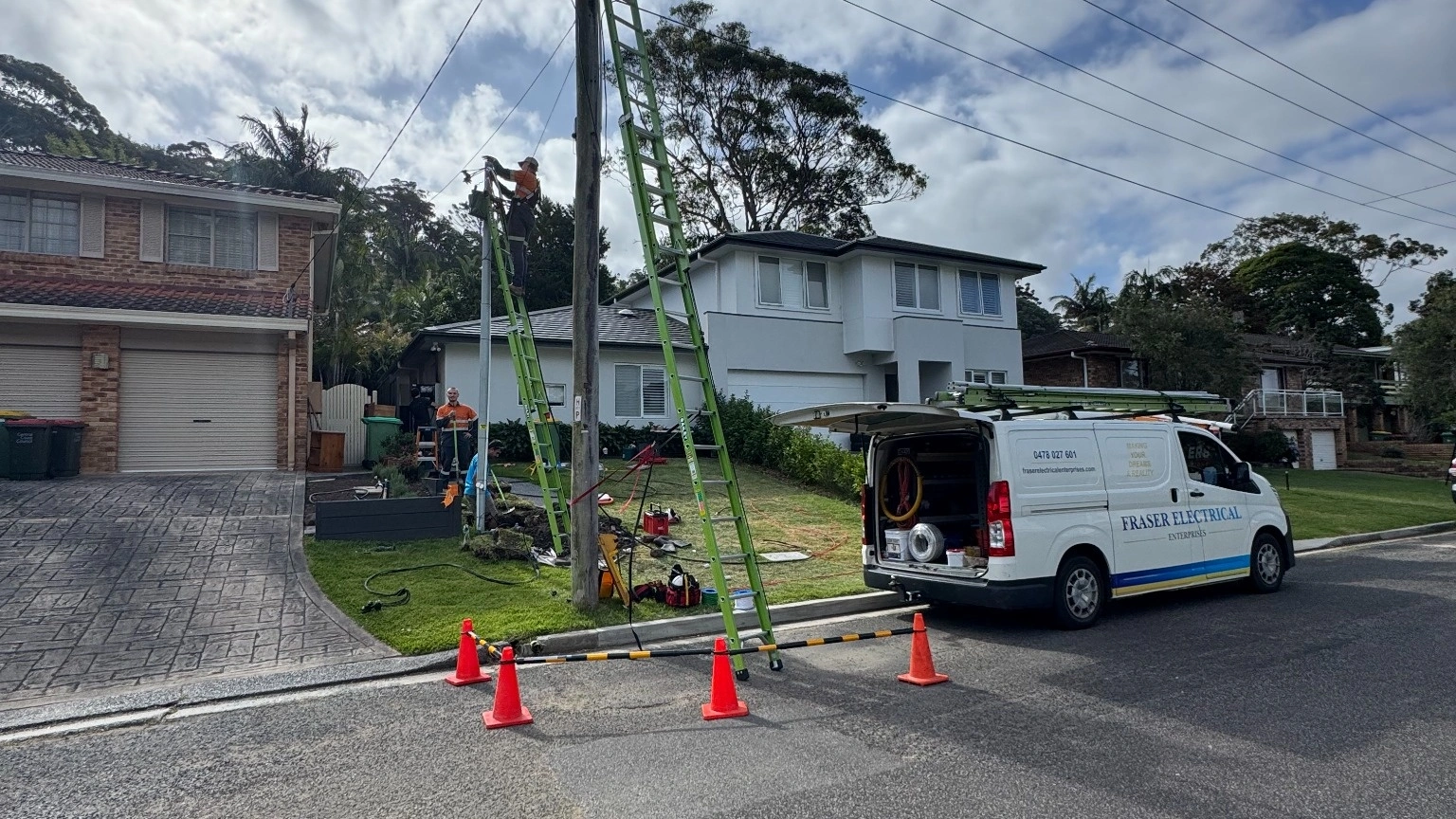
When an energy retailer or network says a property is “power connected”, it does not always mean the lights will come on as soon as the switch is flicked. Under Australian network rules, the term usually relates to the status of the supply at the street and the metre, not the safety or readiness of the customer’s installation inside the property.
Understanding what is considered “connected” helps explain why a new build, renovation or metre upgrade can still have no usable power and why a professional electrician is often required to bridge the gap.
In most network areas, “power connected” means the distributor has:
From the network’s perspective, the job is complete once electricity is available up to the point of supply. This could be the overhead service line to the fascia, the underground service to a pit and pillar or the connection into the metre box.
However, the property can still be without usable power if:
These items are all on the customer side and sit outside what the network classifies as “connected”.
Before a network can energise a new or altered connection, it relies on certification from an electrician that the installation is safe and compliant. For overhead and underground services, this must be a Level 2 accredited service provider.
“Ready for connection” usually means:
If any of these details are wrong, the network may still list the site as connected in its system but will physically leave fuses removed or links open. To the homeowner, it looks like a dead supply even though the paperwork shows “power connected”.
Whenever the fault or missing link is between the street and the main switchboard, only a Level 2 electrician is authorised to work on it. This includes:
Expert electricians can test at each stage, from the network side through to the switchboard, to identify exactly where the supply stops. This is often what resolves the confusion between a retailer or network saying a site is “connected” and a customer standing in a dark house with no power.
Power connections can appear to work perfectly on the day they are installed, then start tripping, flickering or failing completely weeks or months later. When this happens, the cause is often hidden inside the metre box, consumer mains or supply point, which is why issues frequently need a Level 2 electrician rather than a standard electrician. Understanding the common reasons for failure helps homeowners know what to look out for and when to call for specialist help.
Most failures are not because of a single faulty appliance; it’s because of how the property wiring interfaces with the network supply. Problems at this interface can be intermittent, can worsen over time and can carry serious safety and fire risks if they are not addressed correctly.
One of the most common reasons power connections fail after installation is a poor mechanical or electrical joint during work. If lugs on consumer mains are not crimped correctly, terminations on the service fuse are not properly tightened, or neutral connections are slightly loose, the connection may pass initial testing but degrade under real load.
As current flows through a loose or poorly made joint, it creates localised heating. Eventually, this heat causes metal parts to oxidise and expand, making the connection even looser. Eventually, the joint can carbonise or burn, leading to symptoms such as lights dimming when large appliances start, humming at the metre or main switchboard and, in serious cases, melted insulation or burning smells. Rectifying these faults requires a Level 2 electrician because the work involves opening network seals, working on service fuses or replacing damaged consumer mains.
Even a correctly installed power connection can fail prematurely if it is exposed to harsh conditions or loads it was not designed to handle. Corrosion is a frequent cause where overhead service lines, service fuses or main switches are exposed to coastal air, moisture or insects inside the metre box. Corroded contacts increase resistance, which leads to heat, arcing and eventual failure of the connection.
Modern households also place far greater demand on existing connections than when many properties were first wired. The addition of air conditioning, EV chargers, induction cooktops and home offices can push older consumer mains and service equipment close to or beyond their design capacity. Persistent overloading can cause breakers or fuses to trip repeatedly and can overheat cable terminations or metre connections.
Sometimes, the apparent installation failure is actually a problem on the supply side rather than inside the home. Damaged service lines from the street, loose overhead connections at the point of attachment, failing service fuses or a compromised neutral at the supply point can all cause intermittent power loss, partial outages on one phase or unexplained voltage fluctuations.
Because these components are part of or directly connected to the electricity distributor’s network, an electrician is required to isolate, test and repair them. Professionals can safely de-energise the supply, replace faulty service equipment, liaise with the network provider and ensure that the property and the incoming supply meet current standards before power is restored.
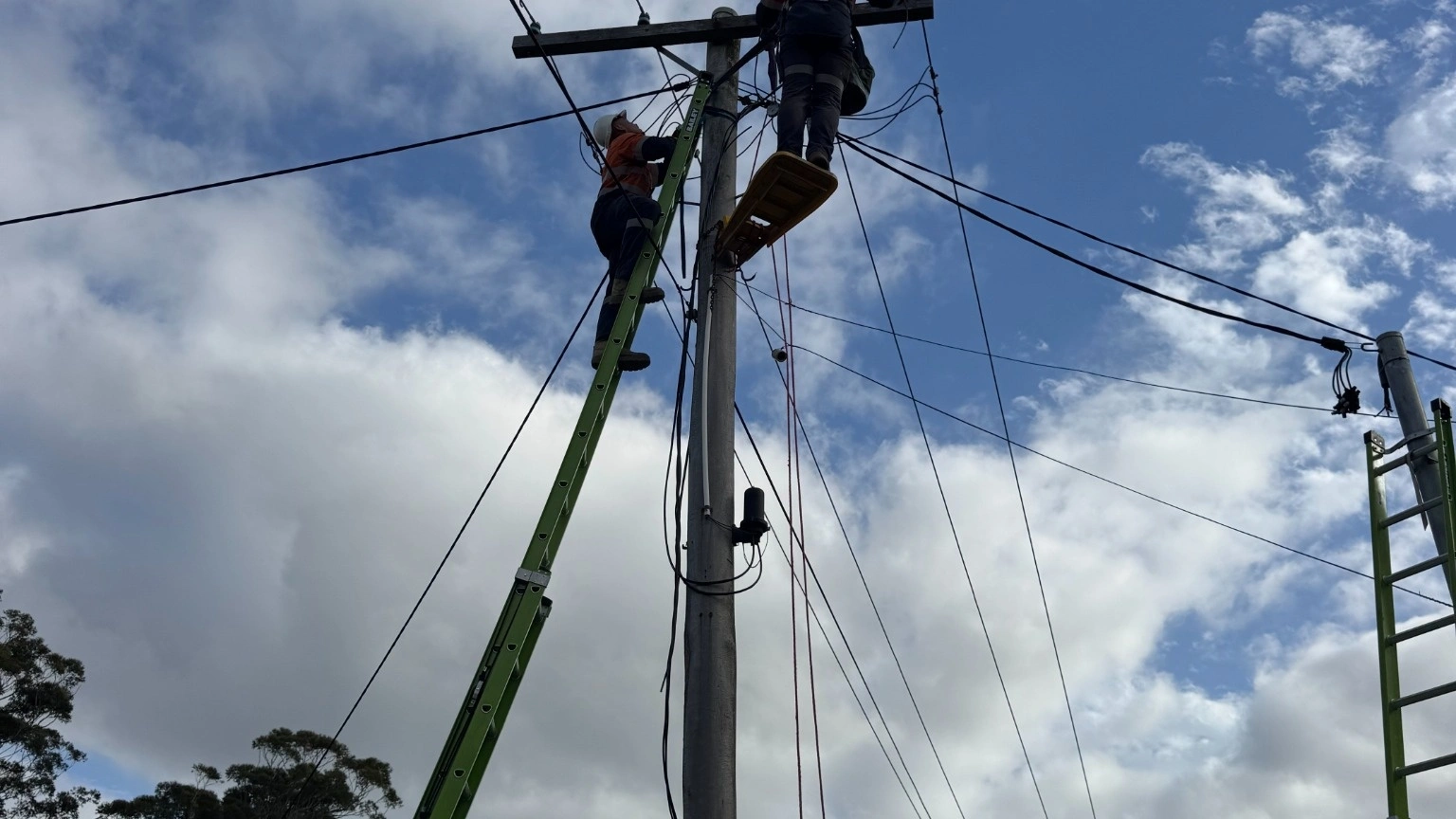
When a new power connection fails, the fault is often not inside the home’s wiring but at the point where the property connects to the electricity network. At that point, the work is no longer standard electrical work. It is classified as contestable network work.
Level 2 electricians are specifically trained and accredited to work on the supply side of the metre. This is where higher voltages, live network equipment and strict distributor rules apply. Using a standard electrician in these situations is not just unsafe; it is usually illegal and will not be accepted by the local network provider.
Level 2 electricians hold accreditation that allows them to work on equipment owned or controlled by the electricity distributor. This is essential when a new connection fails because the fault is often found in:
Only these experts can legally disconnect and reconnect a property at the network point, replace or upgrade service cables or restore supply after a defect notice. They can also liaise directly with the distributor and metering providers to ensure the work is logged, tested and energised in line with regulatory requirements.
Power issues after a new installation often involve multiple parties, such as the builder, retailer and network provider. The symptoms can be intermittent tripping, partial loss of phases in three-phase supplies or low voltage under load. Finding the true source of these issues requires specialised skills and equipment.
Level 2 electricians are trained to:
Because they can access and test on both sides of the metre, they can tell whether the problem lies in the customer’s installation or in the network supply. This avoids repeated callouts and arguments between trades about who is responsible.
Work at the network interface carries a higher risk than work inside a house. Faulty or loose connections at this point can lead to arcing, melted insulation, fire or dangerous touch voltages on metalwork.
Level 2 electricians are required to:
This means every repair or adjustment at the supply point is completed in a way that protects the occupants, meets the distributor’s technical requirements and avoids future defect notices or disconnections.
Once the electrician has corrected the fault and restored a safe supply, there are several steps that follow before the power connection is considered fully complete. Homeowners often expect everything to go back to normal immediately, but there are checks, paperwork and network inspections that must be finalised.
Electricians manage most of this process on the customer’s behalf so the property can be safely re‑energised and stay compliant with NSW network and safety requirements.
After repairs or upgrades are completed, the electrician will first test the installation to confirm it is safe to reconnect.
They will typically check:
Once these tests pass, the electrician will re‑energise the service either at the point of attachment, the service protection device or the metering panel, depending on the type of work carried out. Power is restored in stages, so if an issue appears on a particular circuit, it can be isolated without affecting the whole premises.
The electrician will then walk the customer through the site, checking lights, appliances and major equipment to confirm everything is working as expected and there are no obvious signs of nuisance tripping or undervoltage.
After the physical work, the administrative and compliance side begins. In NSW, the network distributor requires formal notification that defect work, upgrade work or a new connection has been completed.
Electricians will:
If a defect notice was issued, the electrician will ensure the rectification paperwork references that notice so the network can clear it from the system. This is important because unresolved defects can lead to disconnection or delays with future upgrades.
Once the immediate fault has been fixed, it is common to uncover underlying capacity or age-related issues that may need attention in the future. Professionals will often provide written recommendations following the job, which might include upgrading an old switchboard, improving earthing or planning for higher loads such as EV chargers or additional air conditioning.
Customers are encouraged to monitor:
If these symptoms occur, the electrician can return to investigate before they develop into another supply fault or safety hazard. This proactive approach means the connection remains reliable and compliant long after the original issue has been rectified.
When a new power connection fails after installation, it’s rarely “just a small issue”. It’s usually the result of hidden faults, incorrect load calculations, non-compliant workmanship, damaged cables or problems at the network interface. Everything discussed, from understanding the difference between standard electrical work and Level 2 service to the importance of correct metering, earthing, overhead and underground service integrity and meeting NSW Service & Installation Rules, comes down to one key point: your power supply is only as reliable and safe as the expertise behind it. That’s why, when connection issues appear after an installation, calling in a qualified Level 2 electrician isn’t an optional extra; it’s the only responsible way.

