Licence No. 387609C
A power point may be suitable inside a cupboard, but the location needs to work with the equipment, ventilation and access. For homeowners on the Central Coast, Fraser Electrical can assess a concealed charging station, study cabinet or media unit before the outlet position is finalised.
The aim is to keep connections accessible and leads clear of moving joinery. Installing or relocating a power point requires a licensed electrician.
Start with a list of the devices you intend to use. Include their chargers and adaptors, which devices will operate together and whether they will run with the doors closed.
A phone charging occasionally has different space and operating needs from a laptop dock or media equipment left connected throughout the day. Several chargers can also take up more room than expected, particularly when they have bulky plug bodies.
Decide whether devices will stay inside while charging or whether only their power supplies will sit in the cupboard. A laptop needs room for its body and ventilation, while media equipment may continue producing heat in standby mode. Closing the doors does not necessarily mean everything inside has stopped operating.
Check the manufacturer's instructions for ventilation, operating conditions and positioning. A device fitting neatly onto a shelf does not establish that it can operate safely behind a closed door.
Give the electrician the model details and relevant instructions. If the equipment has not been chosen, explain that before the layout is approved. A position designed around one compact charger may not suit a larger adaptor or a device with different cooling requirements.
Assess the cupboard as it will be used, including its usual contents and whether the doors will stay closed. An empty cabinet with open doors can give a misleading impression of the available space.
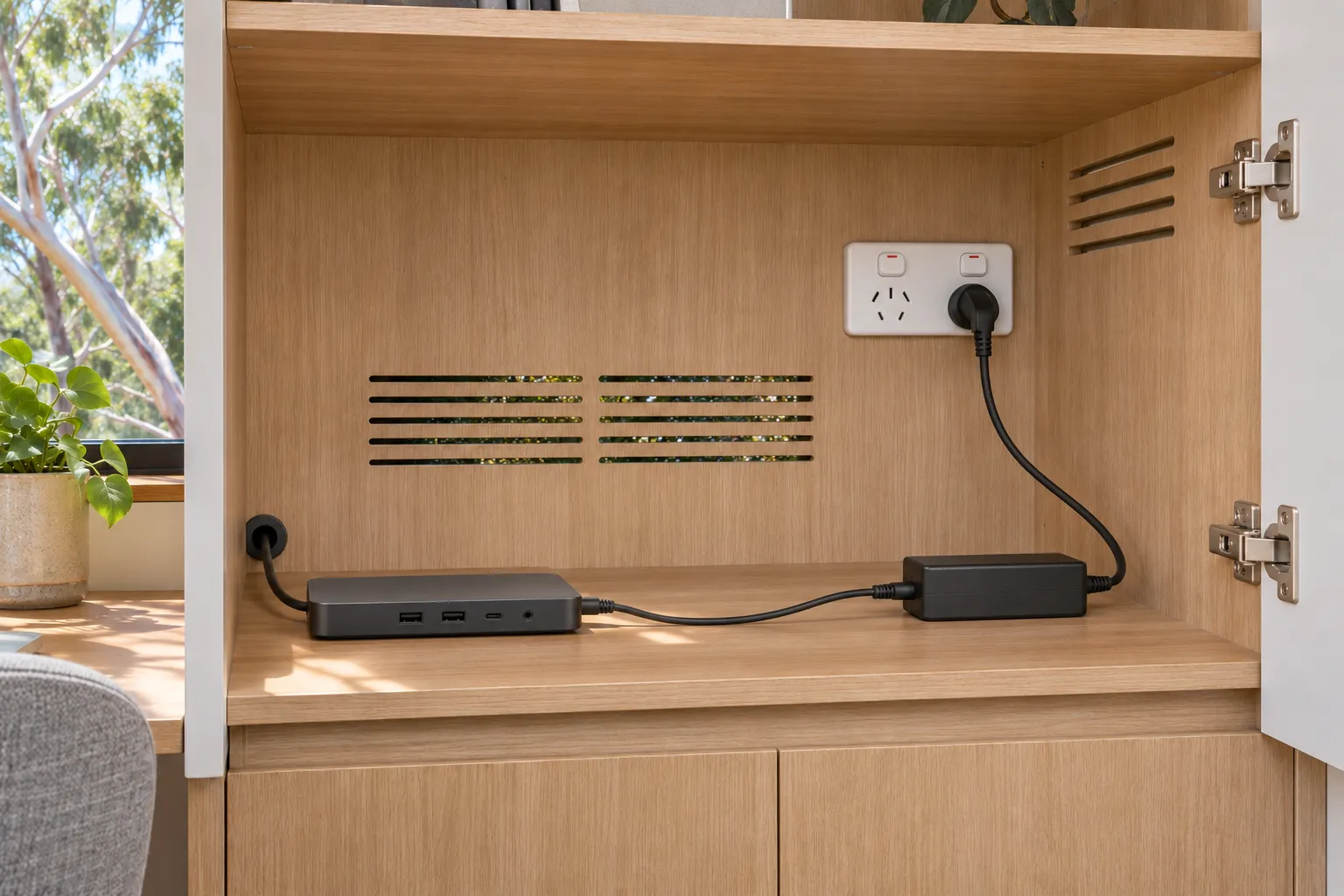
Papers, clothing, bags and other belongings can cover chargers or obstruct equipment vents. A dedicated equipment compartment may be more practical than sharing a crowded shelf with general storage.
For rechargeable devices, follow safe battery charging practices and avoid leaving them charging unattended or overnight.
The cabinet design needs to support the ventilation required by the equipment. Adding a few openings does not automatically provide effective airflow, and there is no single clearance suitable for every device. If keeping the required space clear would be difficult during everyday use, reconsider the arrangement before installation.
Allow for the plug body and the lead where it leaves the connection. Pushing equipment against the back of a cabinet can place pressure on plugs or force leads into tight bends. Drawers also need to open and close fully without contacting connections.
Unusual heat, discolouration, a burning smell or damaged connections warrant attention. Stop using the affected equipment if it is safe to do so and seek professional assessment. These electrical warning signs that need attention should not be overlooked because the equipment is concealed.
An outlet needs to remain usable once shelves, equipment and stored items are in place. Your electrician should also assess how the proposed equipment can be safely disconnected or isolated.
Picture changing a charger with the cupboard in normal use. You should have enough room to see and grip the plug without pulling on its lead or reaching blindly behind other items.
Check access with neighbouring sockets occupied, particularly where bulky adaptors are involved. A location that works for one plug may become awkward when several devices are connected. Consider who will use the cupboard and how often equipment will be unplugged.
A fixed shelf can leave a power point visible but difficult to reach. Heavy media equipment may block it completely, making a routine disconnection dependent on moving the device.
Show these obstructions on the joinery drawings. A removable panel or a switch elsewhere should not be assumed to resolve every access or isolation issue; the electrician needs to assess the complete arrangement.
If the outlet position needs changing, leave that work to a licensed electrician. The risks of DIY electrical work still apply when an outlet is being moved only a short distance.
Plan the route between each outlet and device alongside the cabinet layout. Consider the full movement of doors, drawers and any sliding shelves.
A lead passing across a door opening can become trapped when the door closes. Drawer runners can also catch or pull cables that appear clear while the drawer is open.
Allow enough lead length for normal use without stretching connections or leaving loose cable in a moving part's path. Think about how devices will be lifted from shelves or moved to a desk. If a door must remain ajar just to avoid pinching a lead, the cable route needs reconsidering.
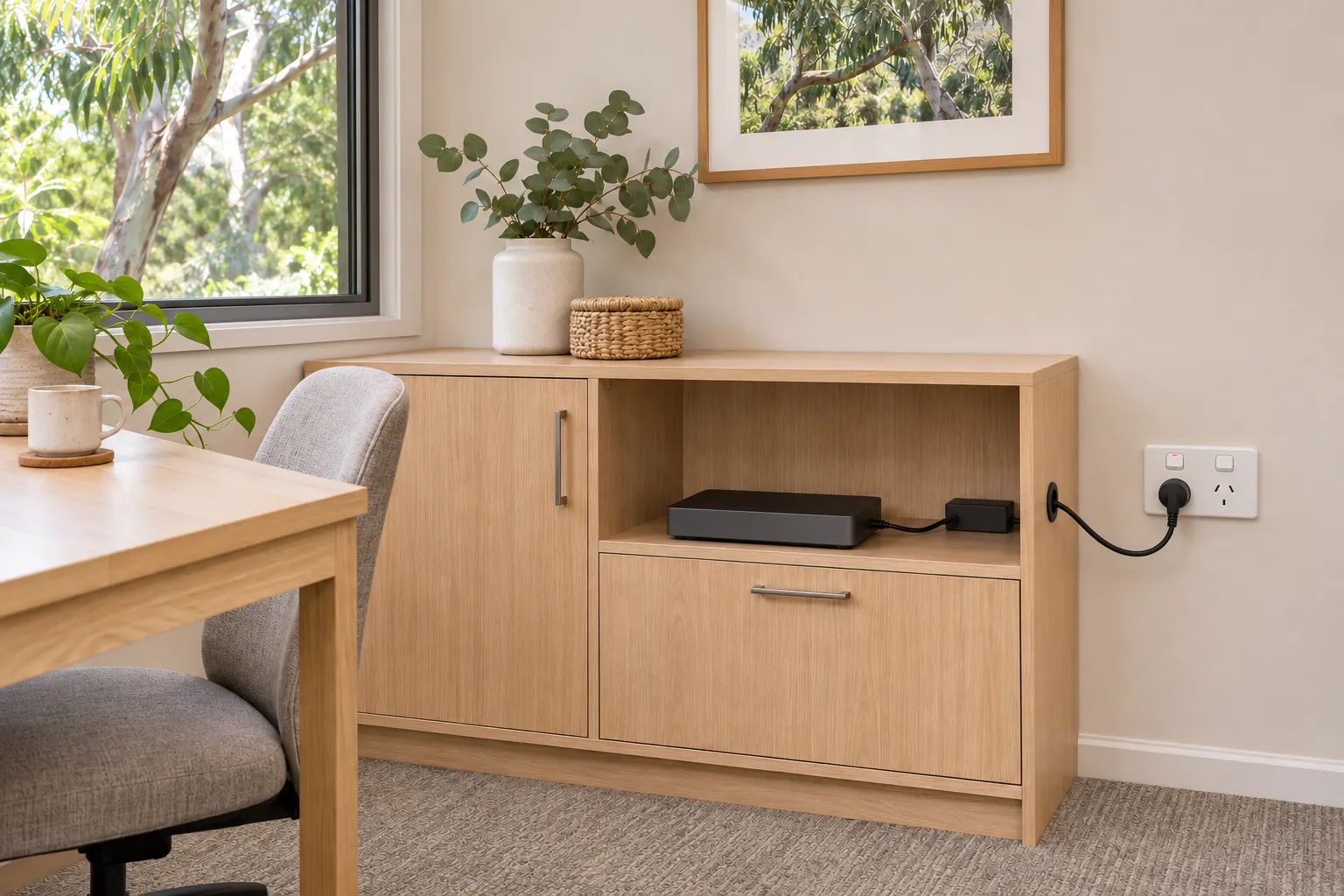
An outlet beside the cabinet or near an open equipment shelf may provide easier access and a simpler lead route. Ask the electrician to compare suitable positions before committing to a concealed location.
Another option is to use the cupboard for unpowered storage and charge devices in a more suitable open area. Keeping the doors closed for appearance should not determine where operating equipment is placed.
Coordinate the electrical arrangement and joinery before shelves, backs and drawers are fixed. Early planning makes it easier to resolve placement problems without reworking the finished cabinet.
Provide equipment dimensions, charger details and manufacturer instructions, along with a description of normal use. Joinery drawings should show cabinet depth, fixed shelves, drawer travel, door openings and intended equipment positions. For an existing cupboard, photographs and measurements can help start the discussion, although an on-site assessment may still be needed.
Fraser Electrical's residential electrician Central Coast services can help homeowners assess the proposed location and existing circuit. The number of available sockets alone does not establish whether the circuit can support the intended equipment.
Ask whether the proposal depends on a particular device, a dedicated compartment or doors remaining open during operation. Those conditions need to match how the household will actually use the cupboard.
Discuss foreseeable changes, such as replacing a compact charger with a larger adaptor or adding another regularly used device. Some flexibility is useful, provided space for ventilation, connections and access is maintained.
Before introducing substantially different equipment, check its instructions against the cabinet arrangement and seek advice if its requirements differ. Keep the agreed equipment area clear rather than gradually filling it with extra devices and stored belongings.

