Licence No. 387609C
A garden light can make your front path easier to follow while shining straight into a neighbouring bedroom. The difference often comes down to where the fitting sits, which way its beam travels and if the light source is visible from beyond the area you want to illuminate.
If you are planning garden lighting, Fraser Electrical assesses how fitting positions, beam direction and lighting controls affect the finished result. Understanding these considerations before installation makes it easier to illuminate paths and garden features without creating unnecessary glare for neighbouring properties or your own living areas.
Start by considering who will see the lights, not just the plants or paving you want to highlight. A fitting that looks discreet during the day can become the brightest object in someone's view after dark.
You do not need access to neighbouring properties to begin this assessment. From your own garden, identify visible windows, changes in elevation and directions in which light could travel beyond its intended target. Your electrician can use these observations when planning fitting positions and beam direction.
A low garden fitting is not automatically out of sight. If your garden sits above the neighbouring property, a light besides your path may be close to the height of a bedroom window below. On a sloping block, the same fitting can look sheltered from one direction and fully exposed from another.
Upper-storey windows also deserve attention. An upward-facing beam aimed at a small tree may continue past its canopy towards a window above the fence line. Even when the beam misses the glass, an exposed lamp or bright lens may remain visible from inside the room.
Fences provide useful reference points, but they are not complete light barriers. Gaps between palings, open gates and changes in fence height can create clear sightlines. A fitting hidden from your viewpoint may still be visible diagonally from next door.
Ask your electrician to consider these boundary conditions when assessing proposed fitting positions. If lighting forms part of a larger project, include the garden layout in your electrical planning for a new build or rebuild, rather than leaving external lighting decisions until the landscaping is finished.
Ku-ring-gai Council’s guidance on reducing intrusive outdoor lighting recommends positioning lights away from neighbouring bedrooms and living areas, directing beams downwards and using shielding to minimise spill light.
Your own windows and outdoor living spaces need attention too. A fitting aimed away from the boundary might still shine through sliding doors or sit directly in your line of sight from the sofa.
Seated eye height is important around patios and outdoor dining areas. A light concealed from someone standing on the path may be clearly visible to someone sitting nearby. That bright point can compete with the garden feature it is meant to reveal.
Consider the view through the house as well as from the garden. A fitting near the rear fence may line up with a bedroom doorway or create reflections in living room glazing.
Give your electrician the positions of frequently used chairs, dining settings and bedroom windows so the design reflects how the property is actually occupied. This helps identify potential glare before the fittings are installed.
Useful garden lighting puts illumination onto a surface you want to see. Glare is different: it comes from a bright source or reflection that makes the view uncomfortable or harder to interpret.
Reducing outdoor light spill involves more than choosing a lower-output fitting. Beam direction, beam width, brightness and shielding determine where the light goes and whether the source remains visible. A dimmer fitting with poor optical control can still be intrusive.
Think of each fitting as having a specific job. A path light should reveal the walking surface and relevant edges. A feature light might illuminate a section of tree trunk, a textured wall or a specific planting group. It does not need to wash the entire boundary to achieve that effect.
Beam spread describes how widely the light opens out. A broad beam can suit a wider surface, but it may also reach windows or fence gaps outside the intended area. A narrower beam can contain light more precisely, although it needs careful aiming to avoid creating an isolated bright spot.
The size of the target matters. A beam suitable for a broad shrub may overshoot a slender trunk. Likewise, an uplight beneath a young tree may send much of its output beyond the foliage. Ask your electrician how the proposed beam will interact with the feature rather than assuming the plant will contain it.
Brightness and colour temperature also influence the finished appearance. Excessively bright fittings can create strong contrasts between illuminated and darker areas, making the garden uncomfortable to view. Warm-white lighting can provide a softer appearance in residential gardens, although colour temperature alone does not prevent glare or light spill. The appropriate output and colour should suit the task, surrounding surfaces and nearby windows.
Where the site allows, downward-directed lighting can be easier to contain because the ground receives the beam. However, it still needs assessment for sideways visibility and reflections. A downward-facing fitting is not necessarily glare-free if its light source remains exposed to someone approaching from below.
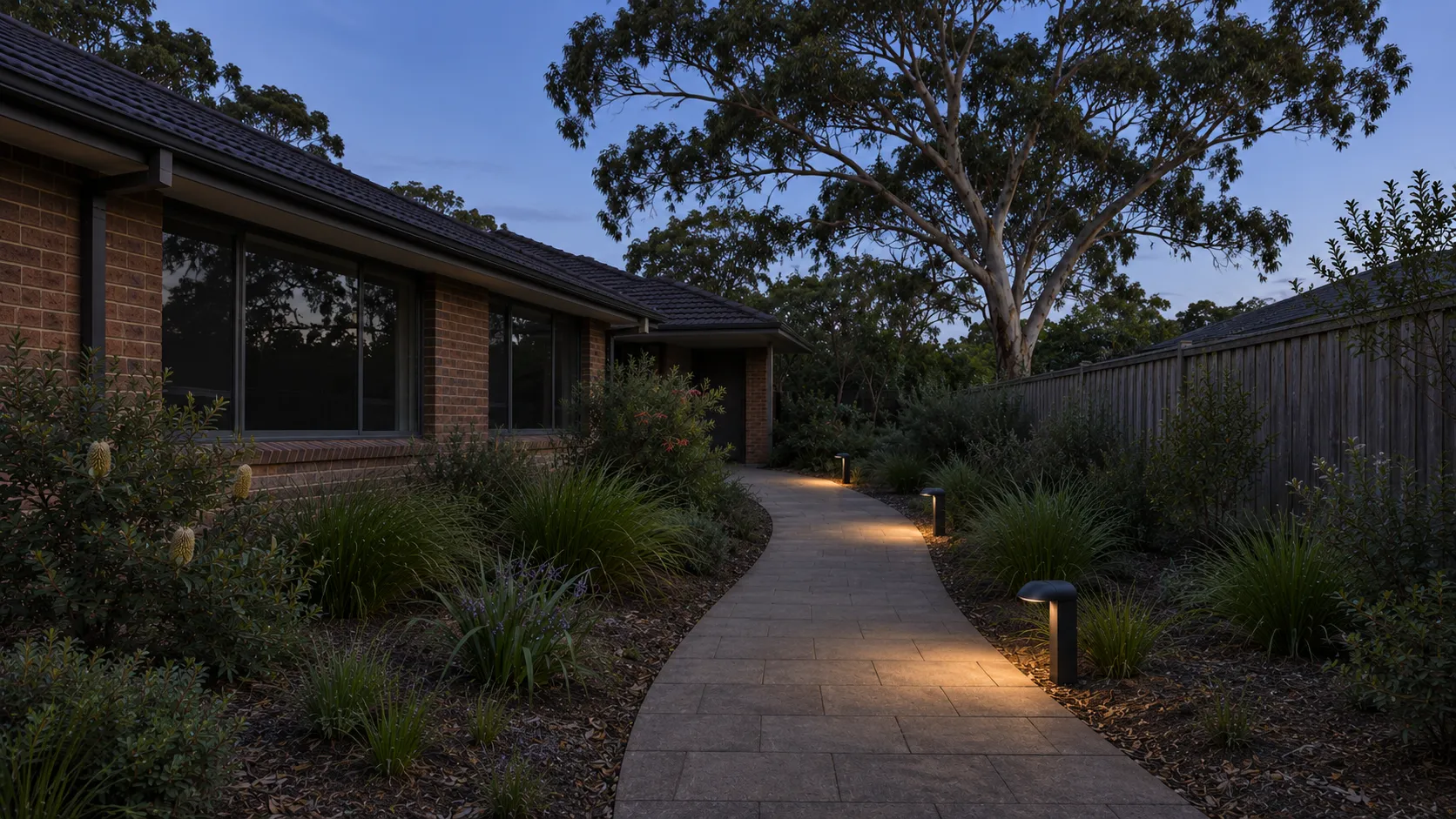
Shielded outdoor lighting uses the fitting's housing, recess or purpose-designed accessories to restrict unwanted views of the light source. Depending on the fitting, this might involve a hood, a deeper-set lens or an internal baffle.
The important question is whether the shielding works from the directions that matter on your property. A fitting may conceal its source from above while leaving it visible from the side or along an approaching path.
When comparing proposals, ask how each fitting controls both the beam and direct views of the lamp or lens. Product photographs showing a glowing fitting do not demonstrate how comfortably it will sit besides your path.
Avoid relying on plants as the only shield. Leaves move, hedges are pruned and gaps appear as planting changes. Physical shielding should form part of the fitting's intended design, rather than being an improvised cover added after installation. Any proposed accessory must be suitable for the fitting and assessed by the installer.
The answer is usually a more deliberate distribution of light, not simply more brightness. Your eyes need enough visual information to follow the route, recognise level changes and see where the path leads.
Garden lighting glare can make this harder. A bright source in your field of view may draw attention away from a step or make the surrounding garden seem darker by comparison. A site-specific assessment helps balance visibility with restraint.
One powerful light can produce a bright foreground and deep shadows behind plants, walls or people. Increasing its output may intensify those contrasts without revealing the obscured parts of the route.
Several carefully controlled sources can distribute illumination more usefully. That does not mean placing lights everywhere. Each additional fitting should address a particular need, such as a bend, a landing or a section screened by planting.
There is also a risk of replacing one large glare source with a row of smaller ones. Multiple exposed lenses can be distracting, specifically when they line up with a window. The number of fittings matters less than what their beams reveal and how well their sources are concealed.
Begin with the walking route rather than a symmetrical arrangement along the fence. Your usual path may run from the driveway to a side gate, cross a patio or turn around a garden bed before reaching the door.
Changes in direction and level deserve attention. A fitting that lights the middle of a path may leave the edge of a step in shadow. Light arriving from an appropriate direction can help reveal that edge, while poorly positioned light can flatten its appearance or hide it behind a shadow.
Consider both directions of travel. A fitting that is comfortable to walk past when approaching the house may shine into your eyes when you leave. The same applies to visitors approaching from a gate rather than your usual parking position.
Where appropriate, positioning path lights besides the walking surface rather than directly in front of approaching pedestrians can help reduce direct glare. Recessed or shielded fittings may also be suitable where the layout allows. Their final positions should account for the beam, surrounding surfaces and nearby windows.
There is no universal spacing that suits every path. Fitting height, beam shape, surface texture, garden growth and nearby windows all affect the result. Request a proposal that explains why each light is positioned where it is, rather than one based only on equal distances. For a curved route, that explanation should account for what becomes visible as people move around each bend.
Good beam control limits where light travels. Good lighting controls limit when that light is present. Both matter if decorative lighting sits near bedrooms or a path is only used occasionally after dark.
Plan the operating pattern alongside the fitting layout. A restrained installation can still become intrusive if it runs long after the garden is empty or repeatedly activates in response to movement outside your property.
Lighting a tree and lighting the route to your door serve different purposes. If both always operate together, a late arrival may illuminate the whole garden when only the path is needed.
Discuss separate control groups for decorative features and access routes. This allows feature lighting to finish earlier while retaining suitable illumination for the areas you still use. It also avoids having to choose between an unnecessarily bright garden and a completely dark approach.
Timers can define a reasonable operating period for decorative lighting. Their settings should reflect your household routine rather than a generic evening schedule. If your garden is normally empty after dinner, there may be little reason for feature lights near bedroom windows to continue for hours.
Ask how the controls will respond to changing daylight hours, altered routines and temporary needs. You should understand how to use the intended settings without needing to change electrical components. A control arrangement that is difficult to understand is more likely to be left in a mode that keeps everything on.
YourHome’s guidance on choosing suitable lighting controls explains how timers, daylight controls and motion sensors can manage outdoor security lighting. Ask your electrician to confirm that the proposed controls are compatible with your selected lights.
Sensor coverage needs the same care as beam direction. If a sensor responds to movement on the other side of a fence or along an unrelated access route, your garden lights may repeatedly illuminate nearby windows.
Your electrician should assess the detection area against the route you actually want to serve. The aim is to recognise someone approaching the relevant path or entrance without unnecessarily detecting movement beyond it. The possibilities depend on the sensor, its position and the site’s layout.
Activation duration matters too. A setting that switches off before someone completes the route is unhelpful, while an unnecessarily long duration extends each episode of unwanted illumination. Discuss the time needed to open a gate, carry belongings or reach the door at an ordinary pace.
Repeated switching can be more noticeable from a bedroom than steady background light. Ask if decorative fittings need sensor activation at all, especially if their beams reach tall plantings close to windows.
After commissioning, note whether unwanted activations occur at specific times or in windy conditions. Those observations give the electrician useful information for reviewing coverage and settings without simply increasing how long the lights stay on.
A daytime plan can identify likely sightlines, but it cannot fully show how the garden will look after dark. Reflections, exposed lenses and overlapping beams often become apparent only once the lighting is operating.
Ask about night-time viewing conditions before approving the work. A clear proposal should explain how aiming and controls will be checked, what opportunities there are for adjustment and whether a return visit would be needed to assess the result after dark.
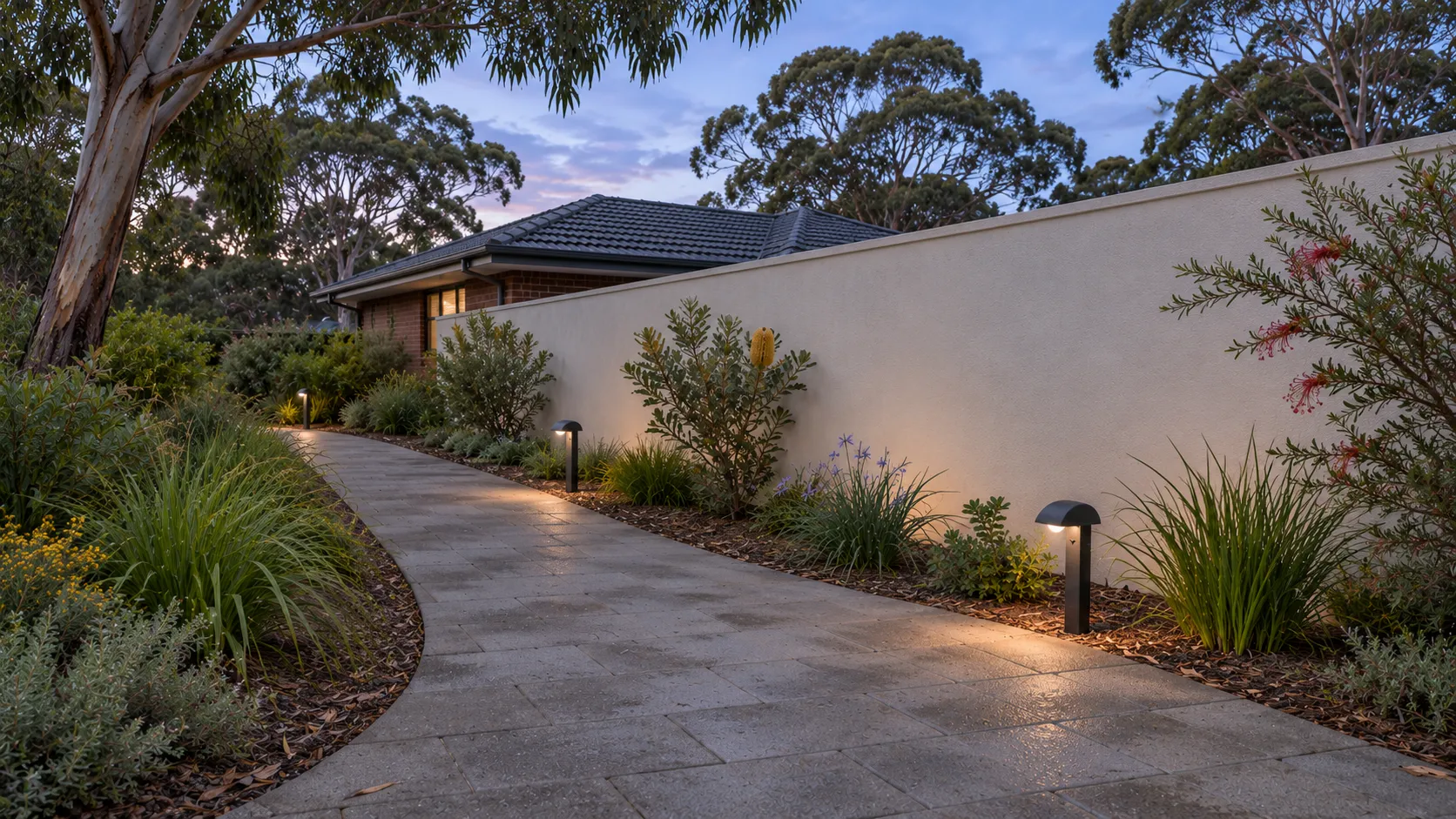
Light does not stop at the first surface it reaches. Pale paving, light-coloured walls and glossy leaves can redirect it into places not directly in the beam. A fitting aimed away from a window may still create a bright reflection visible through the glass.
Wet conditions can change the effect again. Paving that looks subdued when dry may show stronger highlights after rain. You cannot predict every condition, but you can flag reflective materials during planning and report any recurring problem once the installation is in use.
Review the garden from your normal positions, including indoor seating, outdoor chairs and paths travelled in both directions. Keep observations specific: identify the fitting, where you were standing or sitting and whether the problem was an exposed source, an illuminated surface or a reflection.
Plant growth also changes the lighting pattern over time. New foliage may block useful light from reaching a path, while pruning can expose a source that was previously hidden. A feature beam may need reassessment as a shrub becomes larger or a tree canopy changes shape. Let the electrician know about planned pruning or replacement planting before final positions are settled.
Discuss these viewing conditions with professionals when seeking an electrician in Central Coast. Ask how the proposed design addresses neighbouring windows, your own living areas and the paths you use most often, rather than comparing quotes solely by the number of fittings included.
Fixed wiring, fitting installation and electrical alterations must be completed by a licensed electrician. Have the electrician assess adjustments to fixed fittings, shielding and sensor positions as well. Do not loosen housings, alter wiring or add makeshift covers to control a troublesome beam.
For broader context beyond the lighting layout, you can read about current home electrical safety considerations.
During commissioning, ask the electrician to check whether the intended surfaces receive adequate illumination, whether any fittings create direct glare and whether light reaches neighbouring windows. Sensor coverage, timer settings and separate control groups should also be tested. This allows you to identify problems while the installation can still be adjusted.
Before work begins, clarify whether the quoted scope includes final aiming, control settings and suitable shielding accessories. Also ask how later adjustments would be handled if a fitting becomes intrusive once viewed from a bedroom or seated position.
The best garden lighting makes outdoor spaces easier to use without drawing unwanted attention beyond the property. With careful fitting selection, controlled beam direction and suitable operating schedules, homeowners can achieve a practical and comfortable result. Fraser Electrical can check these considerations and plan an outdoor lighting installation that balances visibility, appearance and consideration for neighbouring homes.

