Licence No. 387609C
Regular safety switch testing helps commercial buildings reduce the risk of electric shock, protect occupants and prevent unexpected downtime. These devices disconnect power when they detect dangerous electrical leakage, but regular testing is necessary to confirm they operate correctly.
Fraser Electrical helps businesses maintain electrical safety through testing, inspections and maintenance. Identifying faults early can help prevent hazards and reduce disruption to daily operations.
A commercial electrician in Central Coast can help businesses establish appropriate testing schedules based on workplace risks, equipment use and applicable requirements.
Safety switch testing frequency in NSW commercial buildings depends on the workplace, the type of residual current device (RCD) and the applicable safety requirements. Workplaces must ensure RCDs are tested regularly by a competent person, with testing intervals determined by the relevant standards and workplace risks.
Construction sites have specific requirements. Under SafeWork NSW guidance:
SafeWork NSW outlines these construction testing intervals in its guidance for construction and demolition sites.
Other commercial workplaces should follow the requirements applicable to their installation, including relevant Australian standards, manufacturer instructions and risk assessments. Businesses should not assume that the same testing schedule applies to every commercial building.
Testing schedules depend on the electrical installation, workplace activities and potential exposure to electrical hazards. Environments involving moisture, heat, dust, vibration or frequent equipment movement may require closer attention.
Key factors include:
Businesses should confirm the appropriate schedule for their premises rather than relying on a generic testing interval. A professional can assess the installation and recommend suitable testing and maintenance arrangements. Regular commercial electrical inspections can complement safety switch testing by identifying wider issues with wiring, switchboards and circuit protection.
Professional safety switch testing involves inspecting the electrical installation and using appropriate test equipment to check whether each device operates within the required limits. A commercial electrician can help businesses identify faulty devices, investigate electrical problems and arrange necessary repairs.
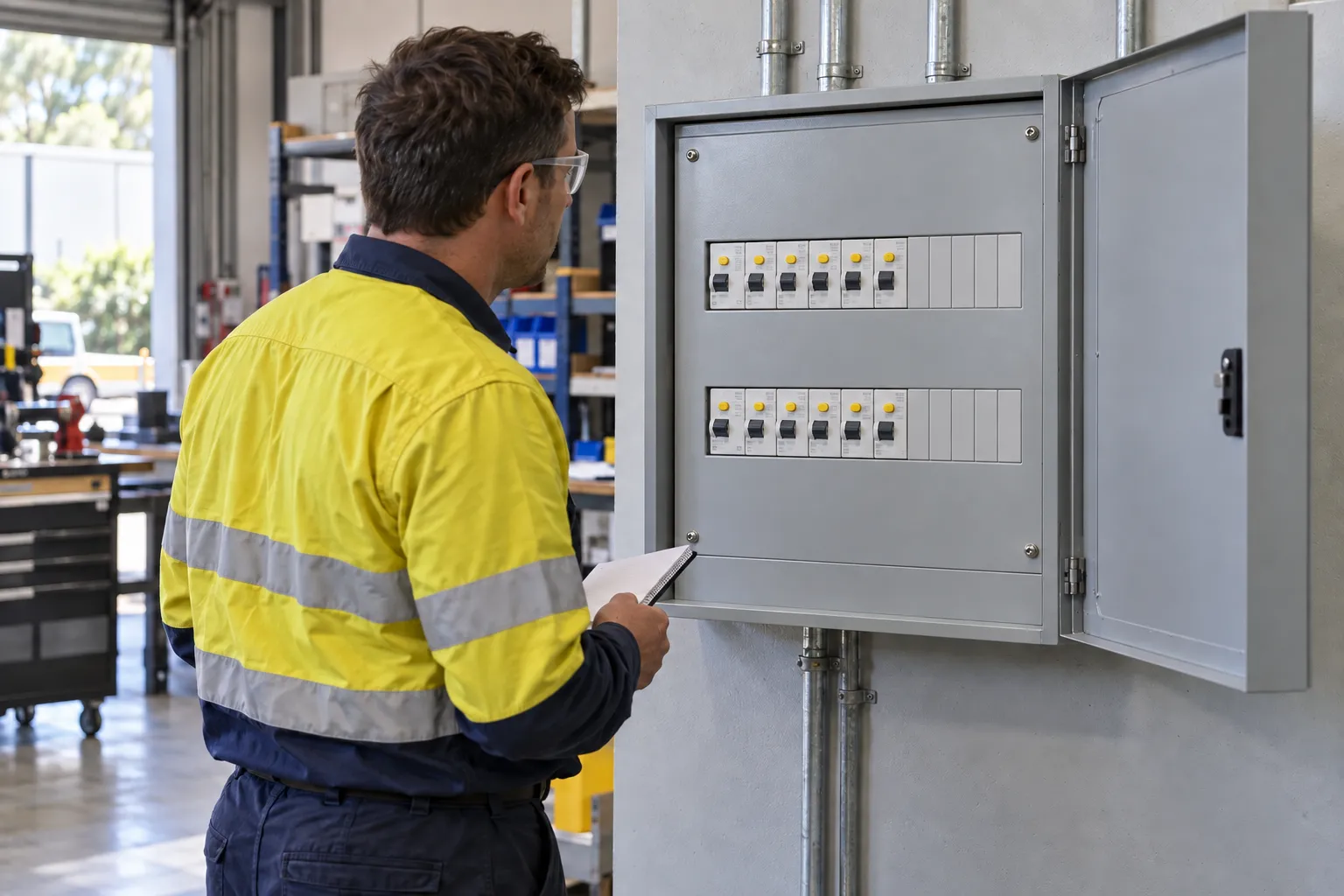
The electrician checks the switchboard, device identification, circuit labelling and visible signs of damage or deterioration. Testing can be planned around business operations where practical, although safety issues should not be delayed for convenience.
A suitable RCD tester measures operating performance, including trip time and current, to determine whether the device meets the applicable requirements. The testing method and intervals depend on the device and workplace.
Test results are recorded and any failures or defects are identified for corrective action. Faulty devices may need repair or replacement, followed by testing to confirm that the affected installation is safe before returning it to service. If a device is confirmed to be defective, professional safety switch replacement can restore the required protection.
Responsibility for workplace safety switch testing rests with the person or business responsible for managing or controlling the workplace. Under NSW workplace safety requirements, this party must take reasonable steps to ensure RCDs are tested regularly.
In leased commercial premises, responsibilities may be shared between landlords, tenants and building managers, depending on who controls the electrical installation and what the lease or maintenance agreements specify. These responsibilities should be clarified rather than assumed.
The responsible parties should coordinate testing, arrange corrective work and ensure records are available when required. Reviewing lease terms and maintenance agreements can help prevent gaps in electrical safety management.
A failed safety switch test may indicate that the device cannot provide reliable protection against electric shock. The affected circuit should be treated as potentially unsafe until the issue has been assessed.
Businesses should take the following steps:
Prompt action helps reduce electrical risks and avoid prolonged disruption, where essential business equipment relies on the affected circuit. A faulty safety switch should never be bypassed to keep operations running.
Commercial businesses should maintain clear safety switch testing records to track results, document faults and support ongoing electrical safety management.
Records should identify the device tested and clearly document the outcome. Useful details include:
Records may be stored electronically or in hard copy, provided they remain legible, secure and easy to retrieve. A central register linked to switchboard labels and individual test reports helps businesses track maintenance and identify outstanding work.
Under NSW workplace safety requirements, records of RCD testing, excluding daily testing, must be retained until the device is next tested or permanently removed from use. Other electrical testing records may have different requirements, so businesses should confirm the rules that apply to their premises and equipment.
Updating records after testing, repairs or electrical alterations helps maintain an accurate maintenance history and supports compliance checks.
Safety switches and circuit breakers protect commercial buildings against different electrical hazards. A safety switch detects current leakage and disconnects power to help reduce the risk of electric shock, while a standard circuit breaker trips when excessive current from an overload or short circuit threatens wiring and equipment.
NSW Government guidance explains how safety switches and circuit breakers provide different protection, with safety switches protecting people from electric shock and circuit breakers protecting wiring.
A safety switch, also called a residual current device (RCD), detects an imbalance in electrical current and disconnects the supply when potentially dangerous leakage occurs. Regular testing helps confirm that it operates correctly.
A circuit breaker disconnects power when a circuit experiences an overload or short circuit. This helps prevent wiring from overheating and reduces the risk of electrical fires. A standard circuit breaker does not provide the same protection against electric shock as a safety switch.
Commercial premises may supply power to computers, refrigeration, machinery, lighting and air conditioning. Appropriate safety switches and circuit breakers help address different electrical risks.
An RCBO combines both protective functions in one device. An electrician can assess the switchboard and identify any gaps in protection. Regular safety switch testing remains necessary even when circuit breakers operate correctly.
Safety switch protection helps reduce the risk of electric shock in commercial buildings where people use electrical equipment. The appropriate protection depends on the electrical installation, equipment, environmental conditions and applicable requirements.

Businesses should consider the following areas when reviewing electrical safety:
Other protective measures, including suitable enclosures and safe cable management, may also be necessary in wet or outdoor environments.
The presence of safety switches in a switchboard does not automatically confirm that every circuit has the required protection. Older wiring, building extensions and separate tenancy switchboards can make coverage harder to verify.
Electricians can inspect the switchboard, check circuit labelling, confirm which circuits are protected and identify deficiencies that require attention. Records should be updated after any remedial work.
A faulty safety switch may not show obvious signs before an electrical fault occurs. However, repeated tripping, failure to reset or a test button that does not trip the device can indicate a problem.
Beware of these warning signs:
Businesses should avoid repeated reset attempts or bypassing the device. If there is smoke or fire, staff should follow emergency procedures and contact emergency services where necessary.
Businesses should arrange an assessment if a safety switch fails a test, trips repeatedly without an identified cause or shows signs of damage. Experts can investigate the fault, test the device and recommend repairs or replacement.
Prompt attention helps maintain reliable protection, while accurate maintenance records make it easier to track recurring problems.
Businesses should stop using any circuit protected by a faulty safety switch until an electrician has assessed the issue and confirmed it is safe to use. A malfunctioning device may fail to disconnect power during an electrical fault, increasing the risk of electric shock.
The entire building may not need to close if the fault is confined to one circuit and electricians confirm that other areas remain safe to operate. The affected circuit may need to be isolated and the faulty device or underlying electrical problem must be addressed before normal use resumes.
Routine testing and planned electrical maintenance play an important role in preventing electrical faults and reducing unexpected downtime. However, operational demands should never take priority over electrical safety and a faulty safety switch should never be bypassed to keep equipment running.
Regular safety switch testing helps commercial businesses protect staff, customers and equipment while maintaining appropriate electrical safety practices. Following the correct testing schedule, documenting results and addressing faults promptly can reduce risks and prevent avoidable disruption.
Fraser Electrical can assess business electrical safety needs, arrange suitable testing and address identified issues. Consistent testing and planned maintenance support safer commercial premises and more reliable business operations.

