Licence No. 387609C
Getting temporary builders’ power organised early can prevent avoidable delays once construction begins. Before trades arrive, the site needs a safe and reliable electricity supply that can support tools, equipment, lighting and temporary facilities without relying on unsuitable leads or undersized generators.
Fraser Electrical helps builders and property owners plan temporary builders’ power on the Central Coast, taking into account the site layout, expected electrical demand and connection requirements. Making these decisions before work starts can reduce the risk of failed inspections, unsuitable board locations and last-minute changes that affect the construction schedule.
This article explains what temporary builders’ power is used for, when it should be arranged, what information is required and how the temporary supply can later be removed or converted to permanent power.
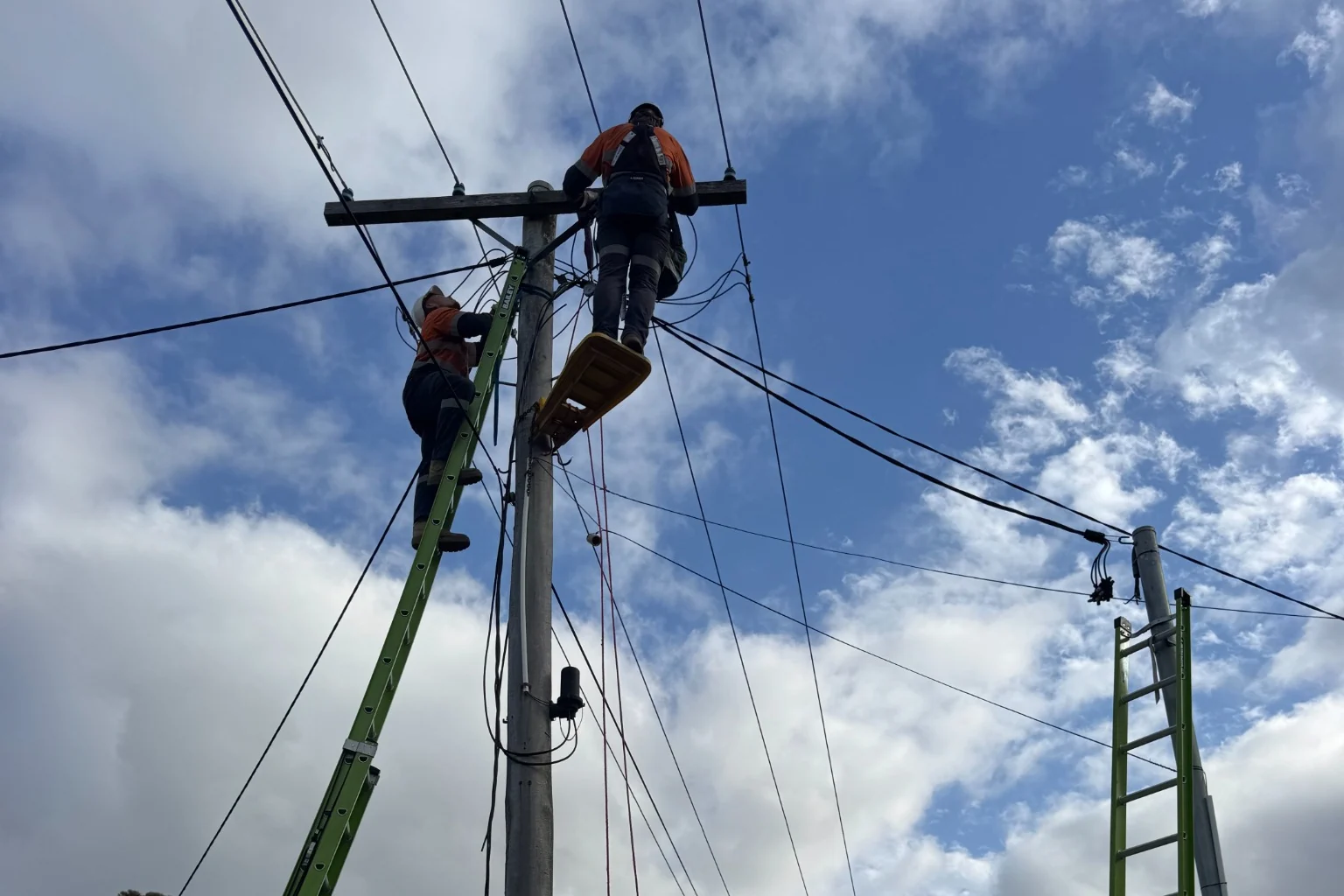
Temporary builders’ power is an electrical supply installed on a construction site before the property’s permanent electrical connection is ready.
It is generally provided through a temporary switchboard mounted on a suitable pole, stand or structure. The installation remains in place during construction and is removed or changed once the permanent switchboard, consumer mains and metering arrangement are ready.
A compliant temporary supply allows trades to work safely and efficiently from the early stages of the project.
Temporary power may be used for:
The required capacity depends on the type of project and the equipment that will operate at the same time.
A single-phase supply may be suitable for many residential projects. Larger builds or sites using equipment with higher electrical demand may require three-phase power. This should be identified during the planning stage because it affects the design of the temporary switchboard and the connection capacity requested.
An undersized supply can cause repeated circuit tripping, particularly when several trades operate high-demand equipment at once. Discussing the likely site load with the electrical contractor helps ensure the temporary installation is suitable for the work being completed.
Reliable power is also important for site lighting, protected outlets and other electrical safety measures.
The temporary switchboard should include the required circuit protection, safety switches and weather-resistant equipment for the site conditions. Extension leads and portable equipment must also be suitable for construction use, inspected as required and positioned to reduce the risk of damage or trip hazards.
Temporary power should not be treated as an informal arrangement simply because it will eventually be removed. Construction sites expose electrical equipment to dust, water, impact, changing access routes and frequent handling, making correct installation and ongoing inspection essential.
Temporary builders’ power should be considered during pre-construction planning rather than after trades have already arrived.
The process may involve an electrical contractor, electricity retailer, metering provider, electricity distributor and, where network connection work is required, an appropriately accredited service provider. The exact steps depend on the address, existing network infrastructure and type of connection.
Because several parties may be involved, enough time should be allowed for applications, technical assessment, site preparation, installation, testing and energisation.

The required connection date should be discussed once the builder’s site commencement date is known.
Ideally, the temporary supply will be ready before electricity-dependent work begins, which may include:
The timing should also account for site fencing, access arrangements and the delivery of materials or equipment. Installing temporary power too late can delay work, while installing it without considering the construction layout may result in the board needing to be relocated.
Current application and connection timeframes should be confirmed for the specific project rather than relying on a standard lead time. Additional assessment, network alterations, public holidays, incomplete infrastructure in a new subdivision or incorrect application details can extend the process.
Where practical, the temporary supply should be planned alongside the permanent electrical connection.
Early coordination can help determine:
Planning these elements together may reduce duplicated work and avoid placing the temporary board where it later conflicts with the building footprint, driveway, fencing or permanent services.
Accurate site and project information helps the electrical contractor assess the connection, prepare the correct equipment and complete any necessary applications.
Missing or inconsistent details can delay approval, result in unsuitable equipment being installed or require additional visits to the site.
Information that may be required includes:
New subdivisions can be particularly prone to address confusion. Lot numbers, temporary street names and addresses used by the developer may not always match information held by the retailer or distributor.
The application details should be checked against the development documents, survey plan and information supplied by the developer.
The electrical contractor will also need to determine how electricity is available near the site.
Relevant details may include:
Ausgrid supplies much of the Central Coast, although the relevant distributor should be confirmed for the property. Network requirements and connection processes can vary according to the location and proposed electrical demand.
The temporary supply must be sized around the equipment that will actually be used.
The electrical contractor may ask about:
Realistic information is important. Designing the supply only for the earliest stage of construction may create problems when more trades arrive or higher-demand equipment is introduced.
The location of the temporary switchboard affects site safety, connection feasibility and how easily trades can access power.
The position should be selected with input from the builder, site supervisor and electrical contractor before installation is booked.
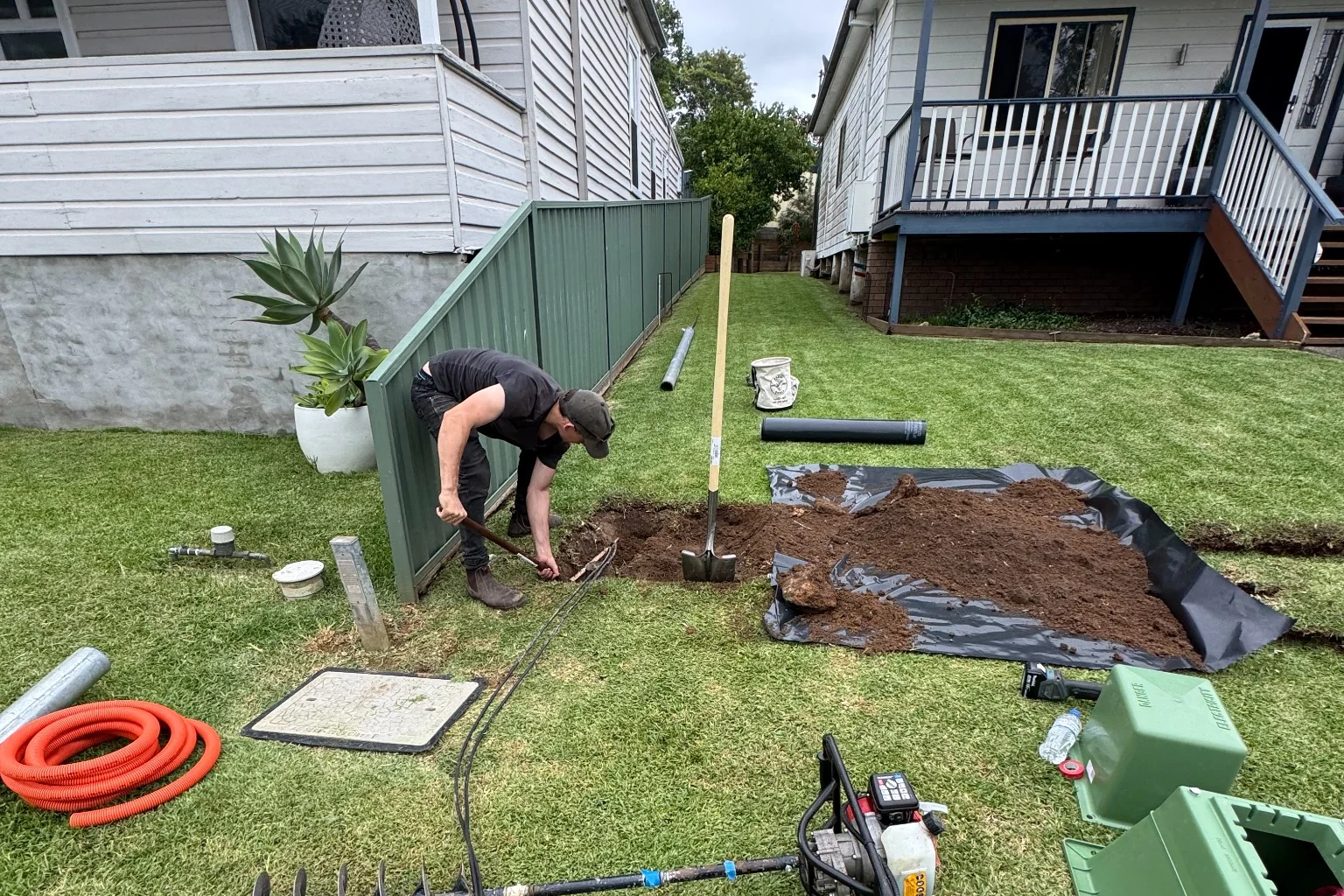
The board should be outside the main building footprint and away from areas that will later be used for:
A location near the front of the property is often practical because it can provide access for installers, authorised workers and meter-related services. However, the best position depends on the site layout and available network connection.
Placing the board in a future driveway cut, scaffold bay or excavation zone can lead to disconnection, relocation and additional trenching costs.
The temporary board must remain accessible to authorised workers without being exposed to unnecessary vehicle or equipment movements.
Before installation, confirm that:
Where a board or pole is close to a driveway or vehicle route, additional physical protection may be required to reduce the risk of impact.
Temporary power equipment should be installed on firm, stable ground in a position that is not prone to flooding or water pooling.
Cable routes should also be considered before the board is installed. Leads and temporary submains should be kept away from:
Where cables must cross access routes, suitable protection or an alternative installation method may be required. The electrical contractor can determine how the cables should be supported and protected for the site conditions.
The board should also be positioned clear of known underground services and easements. Service plans, site markings and the property survey may need to be reviewed before poles, supports or trenches are installed.
The connection process varies depending on the site and whether the work involves private electrical equipment, distributor assets or the network connection point.
A licensed electrician can assess the installation and identify which parts of the process require an electricity retailer, metering provider, distributor or Level 2 Accredited Service Provider.
The initial assessment may include:
The assessment should consider both the current site requirements and how the project will develop. A board that is suitable during excavation may become difficult to access once scaffolding, deliveries and multiple trades are present.
Depending on the project, the connection process may involve:
The information required can be technical, so applications are often prepared or supported by an electrical professional.
Responsibilities should be clarified early. The builder or property owner may need to establish the retail account, while the electrician or accredited service provider handles technical applications and connection work.
The temporary installation may include:
Once installed, the electrical work must be inspected, tested and documented as required before it is energised.
The installation should also be checked during construction, particularly where site conditions change, equipment is damaged or the electrical load increases. Trades should report damaged outlets, leads, enclosures or supports rather than continuing to use equipment that may no longer be safe.
Temporary builders’ power is often delayed by incomplete information or a site that is not ready when the electrician or connection provider arrives.
Identifying these issues early can reduce return visits, rescheduling and disruption to the construction start date.

Common application problems include:
All project information should be checked before the application is submitted. Corrections after submission can affect processing and connection dates.
Installation may be delayed when:
Marking the proposed location with the builder and electrical contractor before installation helps ensure everyone is working from the same site plan.
The temporary supply may depend on actions completed by several different parties. Delays can occur when the builder, electrician, retailer, metering provider and distributor are working to different dates.
The site supervisor should know:
Clear responsibility for each task reduces the risk of assuming another contractor has already completed it.
Temporary builders’ power remains in place until the permanent electrical installation is ready to be connected.
The changeover should be planned before the final stages of construction so temporary equipment does not interfere with driveways, fencing, landscaping or other finishing work.
Before permanent power is energised, the electrician will generally need to confirm that:
The builder should also confirm whether temporary power is still needed for cleaning, landscaping, defect repairs or remaining trade work.
Disconnecting the temporary supply too early may leave contractors without the electricity needed to complete the project.
Some projects are planned so that part of the temporary connection can be incorporated into the permanent arrangement. On other sites, the temporary board, pole and cabling must be removed completely.
The changeover may involve:
There may be a brief interruption to power while the changeover is completed. Scheduling the work around the remaining trades can minimise disruption.
Temporary electrical equipment should only be disconnected or dismantled by appropriately licensed and authorised electrical professionals. Site workers should never assume that cables are safe simply because permanent power has been switched on.
The temporary electricity account should also be reviewed once the changeover is complete. The responsible party may need to confirm the final meter reading, close the temporary account or update the billing arrangement.
Temporary builders’ power affects more than the availability of electrical outlets. Its capacity, location and connection timing can influence site safety, trade productivity and the wider construction schedule.
Planning should begin once the site commencement date and expected electrical demand are known. The builder, property owner and electrical contractor can then confirm the proposed board location, connection type, access requirements and responsibilities for applications, metering and energisation.
By involving Fraser Electrical early, Central Coast builders and property owners can identify potential connection issues before work starts and ensure the temporary supply is planned around the actual requirements of the site. Early coordination makes it easier to maintain reliable power during construction and manage the eventual changeover to the permanent electrical installation.

